

Yes, it can snow in every U.S. state — even Hawaii and Florida
Yes, it can snow in every U.S. state — even Hawaii and Florida ===
The perfect blend of cold weather and humidity makes snow appear in unexpected locations.

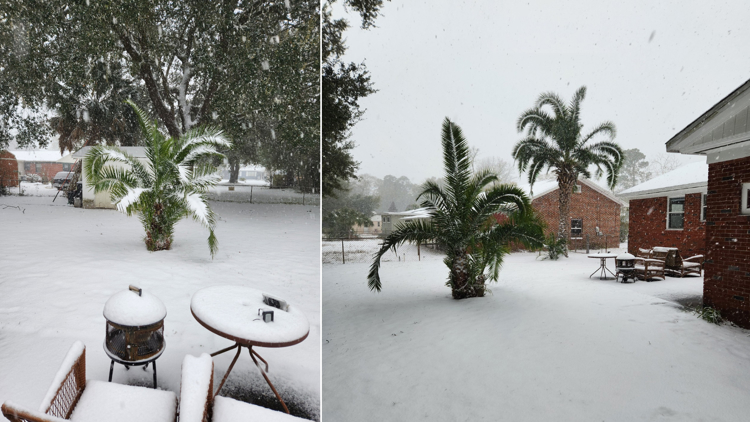
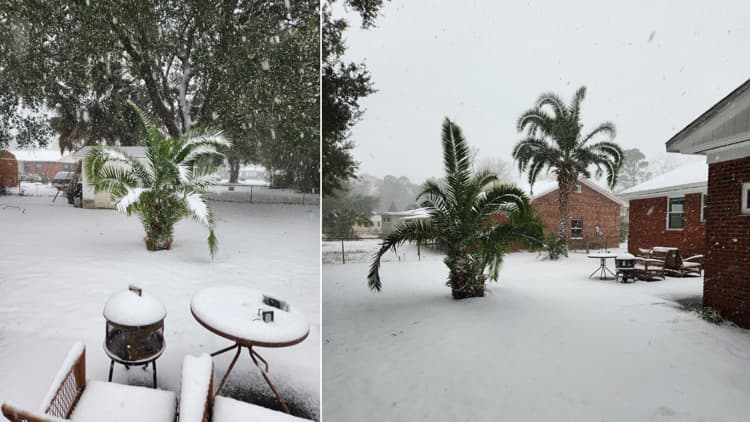
Credit: Rodney Patterson
Snow in Pensacola. Jan. 21, 2025.
Author: Mark Johnson
Published: 11:32 AM EST December 19, 2025
Updated: 11:40 AM EST December 19, 2025

CLEVELAND — It was a once in a lifetime snow event. On Jan. 21, 2025, parts of Texas, Louisiana and Florida looked more like a winter wonderland than the Sunshine South.
The area became a holiday film setting when a 1,500-mile area of heavy snowfall covered lawns, roads and palm trees.
In Louisiana, more than 6 inches of snow fell near Baton Rouge. Eight to 12 inches were measured across the Louisiana Delta.
Residents of the Florida Panhandle also had to burrow out from under 8 to 12 inches of snow!
The snow shut down highways, closed schools, and stunned residents who had never owned a snow shovel.
For many Southerners, it was the first time they’d ever seen real snowflakes falling from the sky at their homes.
While the Deep South isn’t known for blizzards, snow is far from impossible. On rare occasions, a large area of bitterly cold arctic air will travel all the way south to the Gulf. That cold air grabs onto some warm Gulf moisture, and the result is snow.
This happens about every few years.
The cities of Atlanta, Birmingham, Alabama; and Jackson, Mississippi; have recorded snowfall during the last 10 years.
Even Houston, better known for sweltering summers, has awakened to a white coating on occasion.
The areas experience snowfall only occasionally, but such events create major disruptions to the region.
Unlike Northern states that have fleets of plows and salt trucks at the ready, southern states simply aren’t built for winter weather. A single inch of snowfall has the power to shut down entire cities through massive accidents and complete traffic gridlock. Schools and businesses close not necessarily because the snow is deep, but because ice is nearly impossible to manage without the right infrastructure.
When a “Winter Storm Warning” is issued for southern or Gulf Coast states, the snowfall amount criteria is very different from up north. The warning threshold for snowfall in Minnesota and Michigan is at least 6 inches of accumulation. But in the Gulf Coast states, as well as southern Texas, a Winter Storm Warning will be issued for only one to two inches of snow.
The National Weather Service sets these lower thresholds because snow is so rare and the impacts so severe in these warmer regions. One to two inches of snow in Alabama or Mississippi means residents should stay off the roads; schools will likely shut down, and power outages could occur due to ice buildup on power lines and trees. Heavy wet snow combined with freezing, plus the lack of snow removal equipment, will generate hazardous road conditions at any snow depth.
Yes, even Hawaii gets snow. And not just a dusting! The state’s tallest volcanic peaks, Mauna Kea and Mauna Loa, rise nearly 14,000 feet above sea level and often see several feet of snow during winter storms. The experience of surfing in ocean waves during the morning followed by snowball fights on the mountain in the afternoon may seem like science fiction. But, it happens!
The snow there forms when Pacific storms send cold, moist air high enough to freeze over the volcanic summits. Locals refer to this phenomenon as “pōhaku hau” which means “snow rock.” This weather pattern does not impact the regular activities of most Hawaiian residents closer to sea level, but it shows that Winter season extends into even the tropical Pacific region.
The occurrence of snow in Florida is so infrequent that any snowfall creates a local story that people tell for years.
The most famous event occurred on January 19, 1977, when snow fell as far south as Miami! That’s the only time in recorded history the city has seen flurries. Long-time residents share their memories of snowflakes passing through palm trees as newspaper headlines read "The Day It Snowed in Miami." The northern sections of Florida, from Tallahassee to Pensacola, have experienced scattered snowfall and sleet events during only the biggest Arctic cold waves since then.
From the beaches of the Gulf Coast to the volcanic peaks of Hawaii, every U.S. state has recorded snowfall over the years. The perfect blend of cold weather and humidity makes snow appear in unexpected locations. In southern states, it doesn’t take much snow to bring everything to a halt. Roads aren’t designed for freeze-thaw cycles, vehicles rarely have snow tires, and cities don’t invest in snowplow fleets for an event that might happen once every few years. When it snows in the South, it often melts quickly. This creates ice that makes highways dangerous to drive on. Even a half inch of snow can paralyze communities that simply aren’t used to dealing with it.
Click here to check your local forecast from your trusted weather team.
Close Ad
Source: NCM Weather
Locations: Saco
Region: Southern